Though the internet is full of video tutorials, reviews, and demos, there’s nothing like a book – that you can hold in your hands, read in bed or over coffee at whatever speed you like, and open over and over again – to bring a lesson home. The painting books I value most are those that do more than provide step-by-step directions to master a certain technique. Rather, they teach new concepts and new frameworks for thinking about painting that can really advance how I work. These three books have truly helped me take my work to the next level, doing more than any class I’ve taken, and for only $56 for all three (at current prices) the value is excellent! I re-read each of them almost every year, and I still feel like I learn new things each time. Whether you’re a beginning watercolorist or have painted for years, I’m confident you’ll gain from reading these.
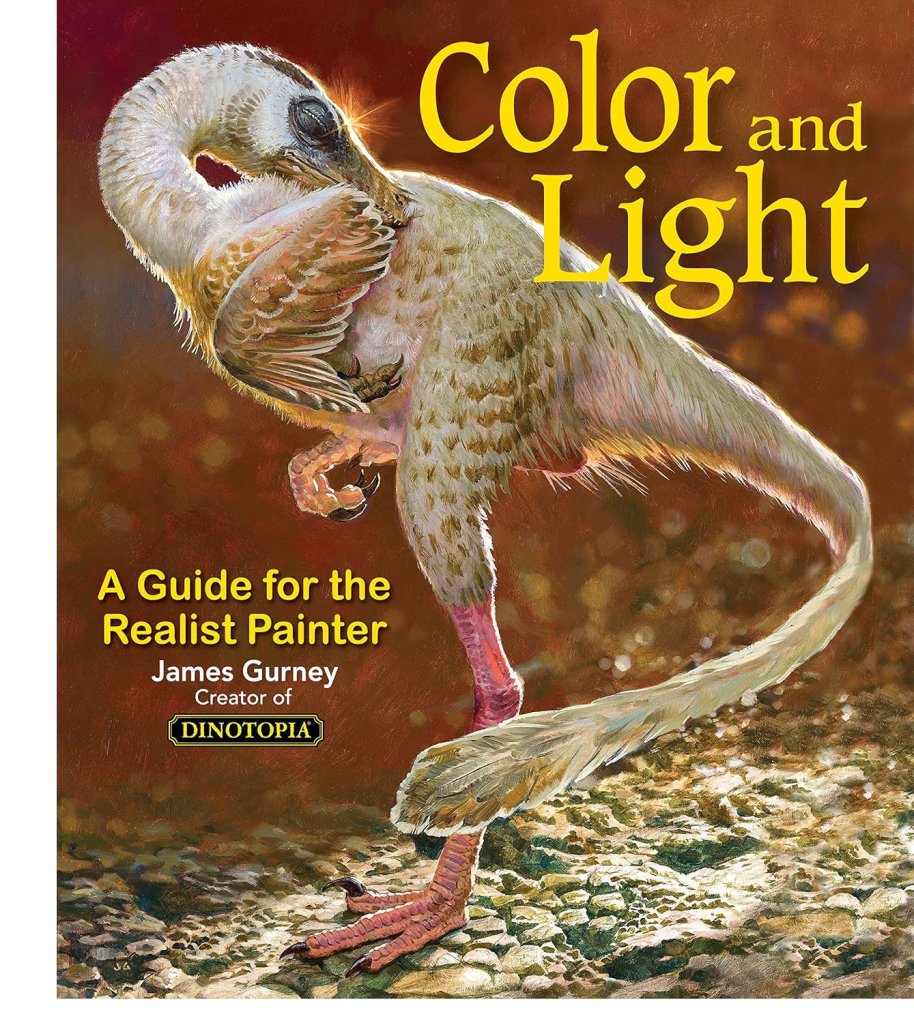
Color And Light by James Gurney
This comprehensive and well-illustrated guide clearly explains the complex topics of color theory, the color of light, how to capture different lighting situations, techniques for choosing limited palettes (such as gamut masking), ways to better understand value, and more. Subjects are explained with a minimum of text, relying on the clear illustrations (all by James Gurney) instead. Don’t be put-off by the playful dinosaur on the cover – this is a clearer and more complete guide to these topics than text books on the same subject. The book is designed for artists working in any medium.
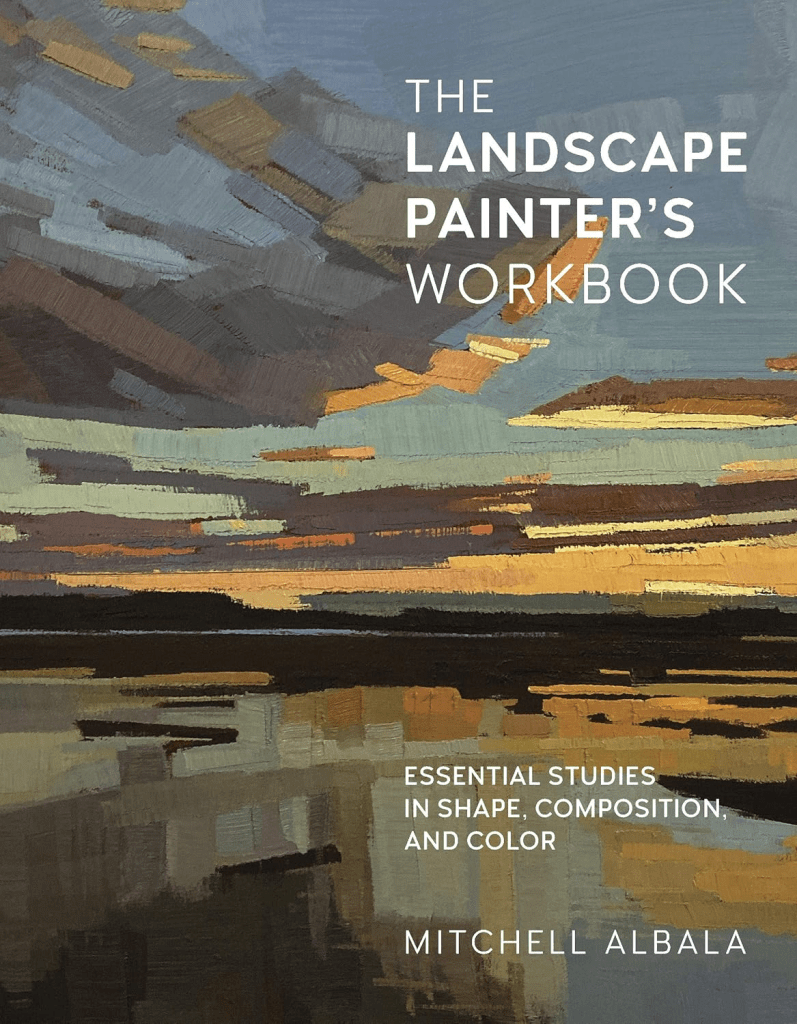
This guide takes you step-by-step through the pre-planning and thought process of designing a good painting. Though I thought I had composition pretty well figured out, I still learned so much from this book! Simple exercises help cement the knowledge from each lesson. I found lessons on simplification, notan studies, and color grouping particularly helpful. All the information is presented clearly and with an engaging voice, and is illustrated with contemporary paintings showcasing a wide range of styles and mediums. The book is written to work for artists working in any two- dimensional medium. Although it’s geared for landscape painters, the material can be just as easily applied to to still lifes or florals. Although The Landscape Painter’s Workbook is available for free on Kindle Plus, you need the full-color printed illustrations in order to fully understand the material. Anyway, it’s $14 well spent!
Mitchell Albala’s other book, Landscape Painting: Essential Concepts and Techniques for Plein Air and Studio Practice is equally good, but is written for oil painters. That said, most of the material can be easily applied to watercolor painting, and there is very little duplication of topics between the two books. If you love the Workbook, you probably won’t regret springing for Landscape Painting as well.
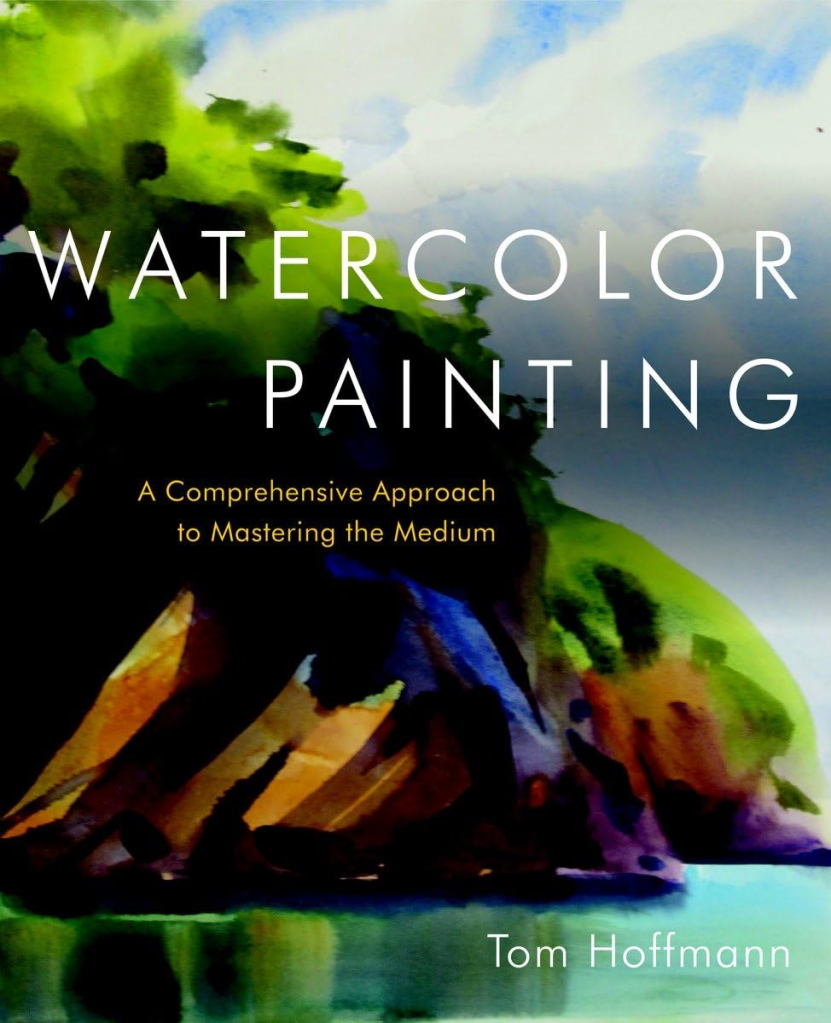
Watercolor Painting: A Comprehensive Approach To Mastering The Medium by Tom Hoffmann
If you only get one of these books, make it this one! It’s the only one of the three that is watercolor specific, and it takes many of the same concepts covered by the other two books (such as color, value, and composition) and shows you how to apply them to watercolor. If you find yourself wondering about process or work-order, this book will help with that too, especially the chapter “Seeing In Layers.” The chapter entitled “Knowing What Not To Paint” was especially helpful for me – it provides many examples of how to let go of details to make complex subjects both achievable to paint and more beautiful. The chapter “Sharing Control of Wetness” is the guide to controlling paint I think every watercolorist wished for when they were first starting out. Both this book and The Landscape Painter’s Workbook include checklists of questions to ask yourself when you’re planning a painting, and ways to expand your creative thought process to help your work level up. Watercolor Painting is illustrated with plentiful paintings by contemporary and historic masters of the medium working in a wide range of styles. Though I tend to buy painting books by artists whose work I’d like to emulate, in this case Tom Hoffmann’s loose, large-scale painting style is not what’s being taught. Rather, it’s a way of seeing, thinking about, and planning a painting.
Have you read any of these books? Which books have been most helpful to you on your watercolor journey? Join the conversation – and don’t forget to subscribe to this blog so you never miss an article!
 Carrie Glessner