I love the look of granulation – the textured look caused by larger pigment particles settling more thickly into the low points of the paper – and I sometimes wish that some of my non-granulating colors had more interesting texture. I recently posted about paint mixtures that highlight granulation, and that got me thinking about granulation mediums – paint additives designed to create granulation-like effects with non-granulating pigments. There’s two main products available: Schmincke’s Granulation Spray Medium and Windsor and Newton Granulation Medium. What’s in these products, and could I make a DIY version?
Both of these products work by pushing pigment together into clumps (flocculation) and need to be applied into a wash that’s fairly wet. The Schmincke spray is mostly ethanol as disclosed on its MSDS sheet. I was unable to find out what was in the Windsor and Newton medium, however, reviews of the product online are very mixed, with many reviewers saying it had little or no effect. Whether this is due to “operator error” or the product itself is hard to say. In the several videos of the product in use which I watched, adding large quantities to a wet wash created texture, but it didn’t look the same as granulation and the effect was most dramatic and interesting when used with granulating pigments.
There are a few recipes available online for DIY granulation mediums, but the ones I found were all based on salt solutions. Sprinkling salt on damp paint draws pigment into the salt crystals creating interesting texture. Unfortunately, dissolved salt moves into the weave of the paper during this process, and will continue to absorb moisture from the air, swelling and shrinking and abrading the paper, damaging paint adhesion, and potentially changing the appearance of the work. Definitely not an archival choice. Well-known watercolor artist Jean Haines advertises that she uses a secret granulating medium recipe that she only reveals to her students. So far at least, she’s done a good job swearing them to secrecy as I couldn’t find any leaked instructions.
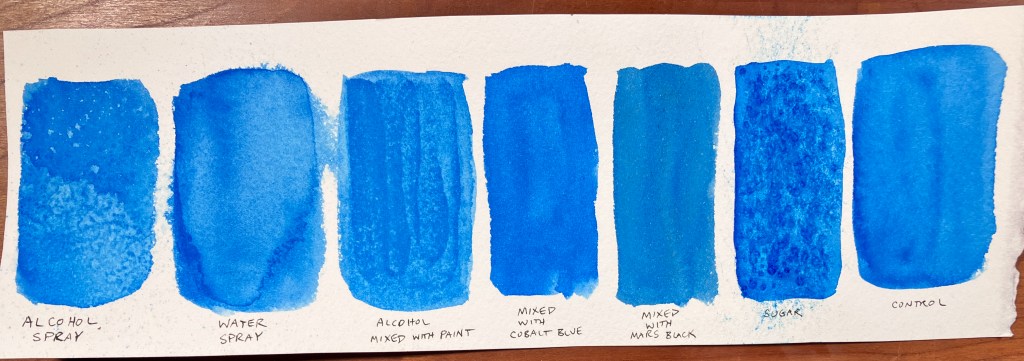
With that information, I decided to do some tests of my own, using Phthalo Blue; the least granulating pigment I can think of. My first test, with rubbing alcohol, had the best results. A quick spritz from a mister bottle on a damp wash made dramatic texture similar to using fine salt. A spritz with plain water did not make the same dramatic results. Mixing alcohol with the paint on my palette provided interesting texture also. Both of these looked similar to the results from commercial granulating mediums. Based on my research on granulating mixtures, I next tried making a granulating effect by mixing Phthalo Blue with granulating pigments – Cobalt Blue and Mars Black. Cobalt Blue had little effect, being too similar to the Phthalo Blue to show up. Mars Black added some visible texture but changed the hue dramatically. Finally, I tried sprinkling a damp wash with sugar, reasoning that sugar (in the form of honey or glucose) is an ingredient in watercolors anyway and the crystals might draw the pigment in the same way as salt. In fact, the sugar did create an effect very similar to salt, however small circles of dissolved sugar formed beneath each crystal which were shiny and dimensional. I suspect they might also be sticky in humid weather. I didn’t love the look, but I suppose it could be useful in some applications.
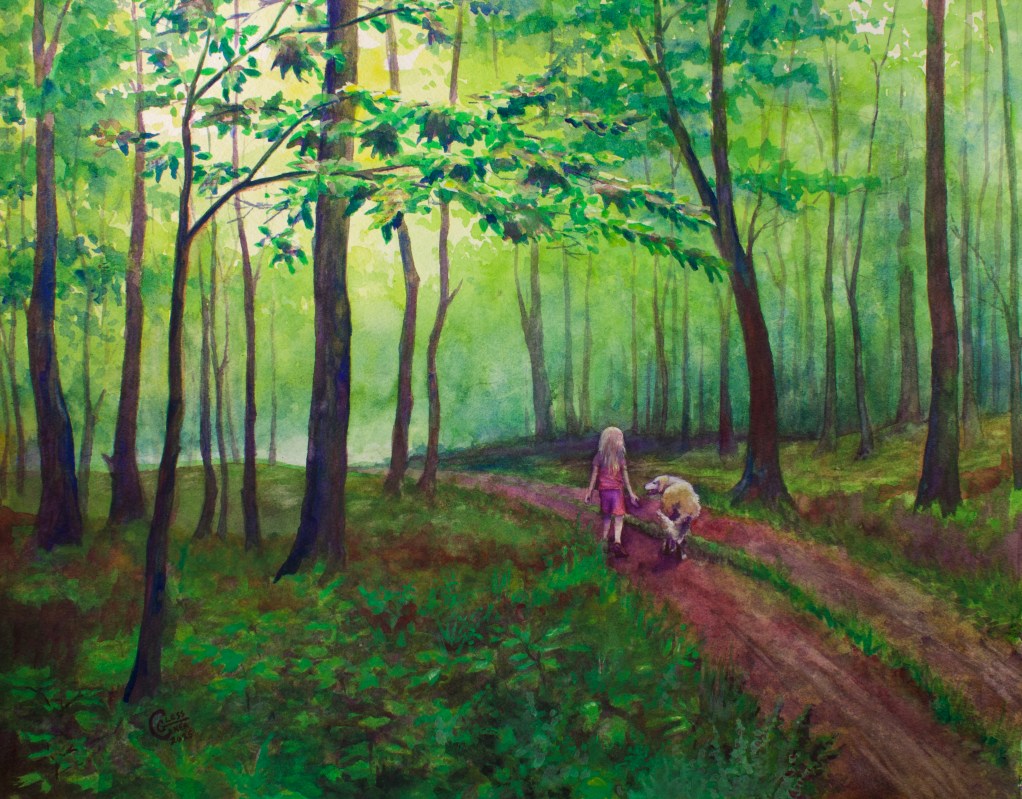
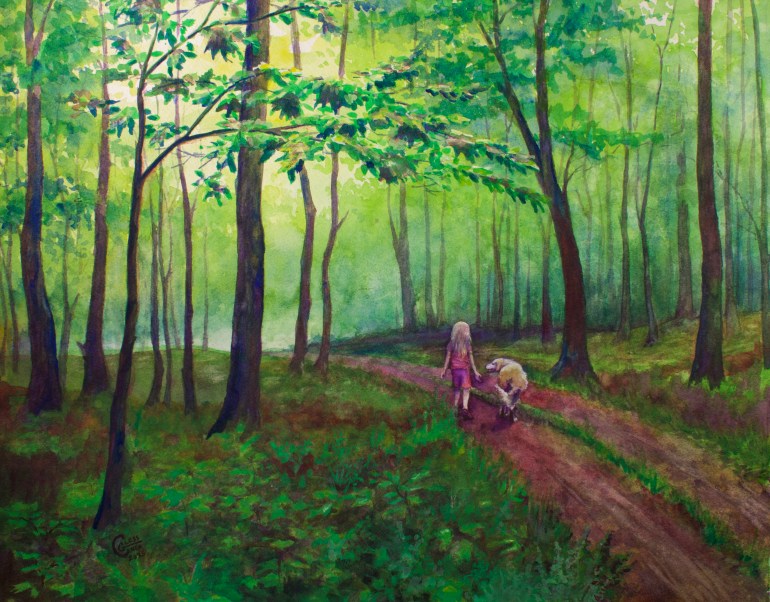
The conclusion I’ve drawn from this research and testing is that there’s not a great way to make non-granulating paint granulate or even appear to granulate. However, a spritz with rubbing alcohol adds impactfull texture and seems to be a good DIY version of the Schmincke spray. Based on this testing, I used alcohol to develop the texture in the road in the painting below. Iron-based pigments like Mars Black and Prussian Blue flocculate more easily, so these might produce even more dramatic effects when used with rubbing alcohol.
Have you tried a granulating medium? How do you add texture to your paintings?
I write about a different watercolor topic every Sunday! Subscribe to have the articles delivered right to your inbox. More subscribers will help me get more exciting interviews and products to test, so thanks for your help!
 Carrie Glessner