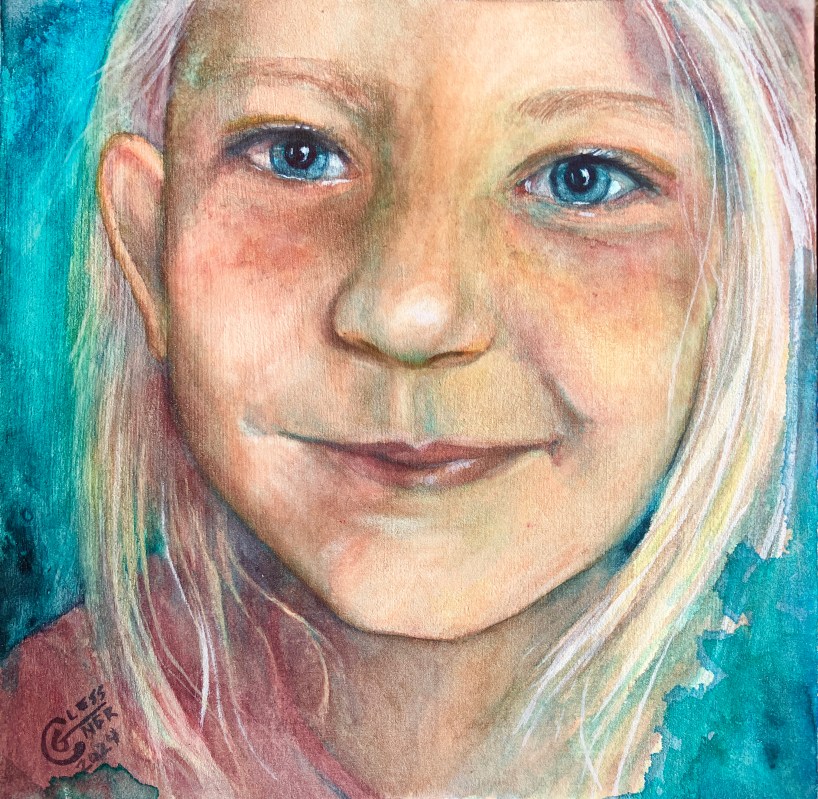
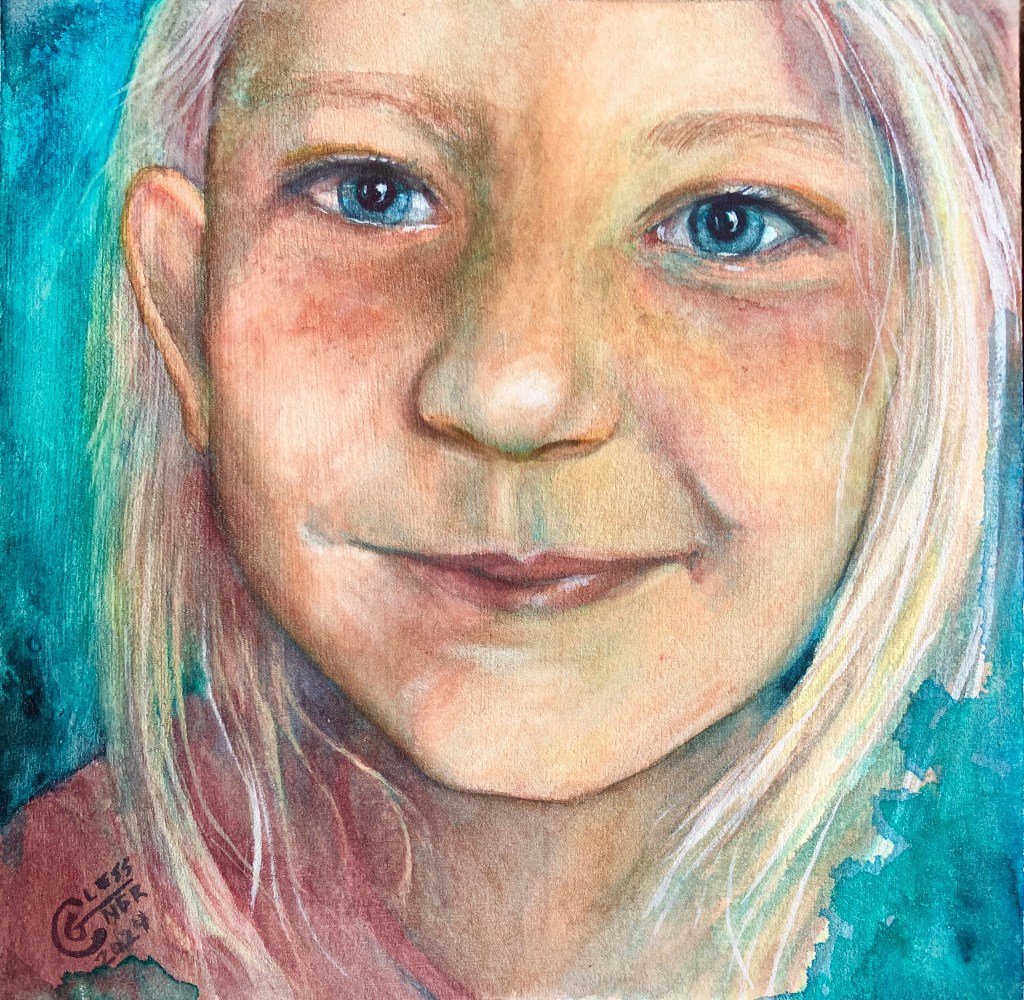
Have you ever wished you could watercolor paint on something besides paper? Watercolor ground makes this possible. This post reviews options for buying or making your own DIY watercolor ground, as well as how to apply it and paint on it. Get ready to open a whole world of new possibilities for your paintings!
What is Watercolor Ground, and Why Would I Want to Use It?
Watercolor grounds are made from an acrylic binder mixed with a granular powder. The ground can be painted onto any substrate that acrylic would stick to, such as wood, paper, cardboard, canvas, or hardboard. The granular texture prevents watercolor from puddling and running all over the place, so you can paint on it as you would on paper (although it doesn’t look or feel quite like painting on paper). When you’re finished, you can frame pieces under glass like a regular watercolor, or seal them with varnish. This makes it possible to frame without glass – a popular, modern look with no distracting reflections. It also makes it possible to paint on objects, like wooden boxes or paper mache ornaments. Watercolor ground is more durable and less absorbent than paper, so you can wipe off or move around your paint as much as you’d like without damaging the surface.
Types of Grounds and DIY Options
Daniel Smith, QOR, and Schmincke all sell watercolor grounds in jars of varying sizes. They are available in a variety of colors and textures. Another option are Ampersand Aquabords, which are hardboard pre-coated with ground. These grounds aim to replicate the qualities of paper, however my experience has been that it’s best to think of watercolor ground as something entirely different – it’s not really like paper at all. You can also make your own ground by combining a liquid base with a powder or powders. Pre-made grounds are fairly expensive – comparable to buying good quality watercolor paper – so making your own has the duel benefits of saving money and giving you more control over the texture.
Liquid Base Options:
- Acrylic gesso
- PVA glue (use archival or acid-free to avoid cracking and yellowing)
- Acrylic paint
Granular Powder Options:
- Baking soda
- Marble dust
- Talc
- Joint compound
- Calcium carbonite
- Modeling paste
Here’s a video of how to make ground with a good basic recipe of 1 part modeling paste to 3 parts acrylic gesso.
Some powders are more absorbent than others, and upping the powder ratio will also make the ground more absorbent. A more absorbent ground will be more like paper to work on, but the colors will be less bright and the ground more likely to crack (cornstarch, for instance, doesn’t work at all). You can play around with various mixtures and ratios to see what gives you the results you like best. If your goal is to produce archival, durable art, I would stick to modeling paste or marble dust designed to bulk acrylic paints, and use them in ratios recommended on the packaging. Other powders might have unintended interactions with paint (baking soda, for instance, is highly alkaline and could cause Prussian Blue, and maybe other colors, to turn brown). Untested mixtures could crack over time. On the other hand, if you just want to give watercolor grounds a try or practice your technique without spending any money, baking soda will work just fine. I’d love to see more long-term testing on how various mixtures hold up – but I haven’t been using these long enough to make any recommendations myself, and I wasn’t able to find any online recipes that had withstood the test of time.
How to Apply Watercolor Ground
Because these use an acrylic base, you’ll want to apply them with an inexpensive brush like a sponge brush or a chip brush. Seal the surface of your board, canvas, or paper with an acrylic product like white gesso (or clear if you’re trying to preserve the original colors of a board or paper) so you don’t waste ground on sealing your surface. Then paint on two thin coats of your ground. In my experience, one coat of ground can lead to an uneven level of granulation, and three doesn’t change things enough to be worthwhile. You can thin the ground slightly with water if needed to get a smooth application. Be sure to keep your brush in water between coats – acrylic dries quickly! After the ground has dried, you can sand it with 200 grit sandpaper to give it a finer texture or even out brush marks (I don’t usually find this necessary, but it’s all what you’re looking for). After sanding, you’ll need to carefully wipe off the dust with a damp cloth.
Painting on Watercolor Ground
Despite manufacturer claims to the contrary, painting on watercolor ground is not at all like painting on paper. But it can be lots of fun if you let go of those expectations! Here are some pointers to get you started:
- Big wet washes on ground pool and puddle – it’s next to impossible to get a big even wash. Embrace the exciting blooms and distinctive watercolor drips instead.
- Paint is not absorbed deeply into the ground, so you can wipe it off and push it around as much as you’d like. Make use of those scrubbing and lifting techniques!
- Glazing requires a very light touch so as not to disturb the layers underneath. I recommend sticking to highly staining colors like Phthalo Blue, Phthalo Green, and Dioxyzine Violet for underglazes, and letting them dry very throughly before continuing.
- Granulating colors like Cobalts will have even more pronounced granulation and will make uneven layers.
- Be careful not to use a very wet wash over dry colors to avoid lifting them and making mud. I’ve found that painting with a tiny brush – size 3 or 4 rounds or smaller – helps me not get too much water on the board.
Artist Ali Cavanaugh uses these techniques to make beautiful watercolor portraits on Aquabord and watercolor grounds – which she calls “modern frescos.” I absolutely love her work, and watching a few videos of her painting was incredibly helpful when I started painting on this new surface. A very different technique is required than the broad strokes I’m usually striving for, but I find I can get more spontaneous quintessentially “watercolor” effects than I do on paper.
Framing and Finishing
If you just like working on ground, it works fine to paint a heavier paper (such as hot-press watercolor paper) with ground and then mat it and frame it like you would any watercolor. If you prefer framing without glass, you can paint on a canvas or board either pre-made or make your own (I cut 4×8′ sheets of 1/4″ hardboard from my local hardware store into the sizes I want) or glue your artwork on paper to a board (Golden has good instructions for this). You’ll then need to seal it with spray varnish. I use Krylon Archival Mineral Spirits Varnish because it’s less expensive, but Golden makes a similar product. If you care about longevity, be sure to use something archival and non-yellowing – the Krylon and Golden products are the only ones I’ve found that fit the bill. I use three coats of gloss varnish and finish with one coat of matte. Occasionally, matte varnish can make little white spots or cloudyness on the painting. If this happens, shake the can more throughly and re-coat – the fresh varnish will dissolve the spots. Alternatively, you could spray one coat of varnish (so as not to disturb the paint) and then add additional coats of brush-on MSA varnish. These varnishes do a great job of blocking UV light, comparable to UV blocking glass, so you can feel good about how you’ve protected your artwork. Varnish slightly darkens and warms colors, so be prepared for some shift and test ahead of time if you’re worried. Now your art can be framed in a plein air frame or a float frame like an oil or acrylic painting. If you painted on an object that will be handled, you may want to opt for a thicker/sturdier acrylic varnish. Just be sure to start with a spray-on product for your first coat so your paint doesn’t smear.
Have you tried watercolor ground? What uses can you imagine for it? Share your thoughts in the chat – and be sure to subscribe if you’d like to get weekly posts delivered to your email!
 Carrie Glessner